

Watching TV has changed because of the advancement of the internet and related technologies. Gone are the days of relying on traditional cable and satellite TV to access your preferred shows. Currently, users have several alternatives to accessing TV. The alternatives include IPTV, pay TV, over-the-top (OTT) platforms, and streaming services, among others.
IPTV (Internet Protocol Television) is the delivery of television content using the internet. However, unlike traditional cable TV, IPTV allows users access to numerous shows and movies, including live shows and events, on-demand videos, and other forms of entertainment.
However, selecting the best IPTV service is beyond determining the number of channels offered and the price. Knowledge of how IPTV works, the different types of services, the speed and type of the internet to be used, what is offered on demand, the compatibility of the devices to be used and the terms of subscription is of great importance when deciding on the service to use. In this piece you will get to know extensively about IPTV providers in Canada and how they are better and more. Let's get started.
Key Highlights
Learn about the basics of IPTV and internet-based TV.
Find out about the different IPTV providers in Canada.
Distinguish IPTV from cable TV, satellite TV and OTTs.
Understand live TV, video on demand, and catch-up TV.
Know how to distinguish the prices of different IPTV services.
Find out how to determine the reliability of different IPTV services.
Learn about foreign entertainment (Indian TV, movies, and web series) and regional TV and entertainment (Hindi, Punjabi, Tamil, Telugu, etc.)
Learn what to look for when choosing an IPTV service.
How IPTV Works
Internet Protocol Television (IPTV) works by utilising internet protocol technology to facilitate the delivery of television programmes. Unlike traditional television signals sent via a satellite or cable, IPTV sends digital signals in data packets.
There are several stages involved in the process:
Preparation of Content: Traditional television programmes, movies, and live broadcasts are recorded, digitised, and stored for online delivery.
Content Delivery: The video is sent via the content provider's network or delivered through an internet-based distribution system.
Connection of Device: The content is sent to, and displayed on, a compatible television, set-top box, media streamer or other delivery device.
Digital Playback: The content is transmitted and then decoded for viewing.
Different IPTV service providers utilise different methods for content delivery. A traditional, managed IPTV service has a closed network, which is used to deliver television signals and is controlled by the content provider. Content delivery via the public Internet is uncontrolled and unmanaged.
In Canada, the CRTC (Canadian Radio-television and Telecommunications Commission) defines IPTV as closed-network television delivered to a set-top box. Services delivered via the public Internet, such as Netflix, Crave or other streaming services, are defined as Internet services by the CRTC.
What Features Do IPTV Providers in Canada Have?
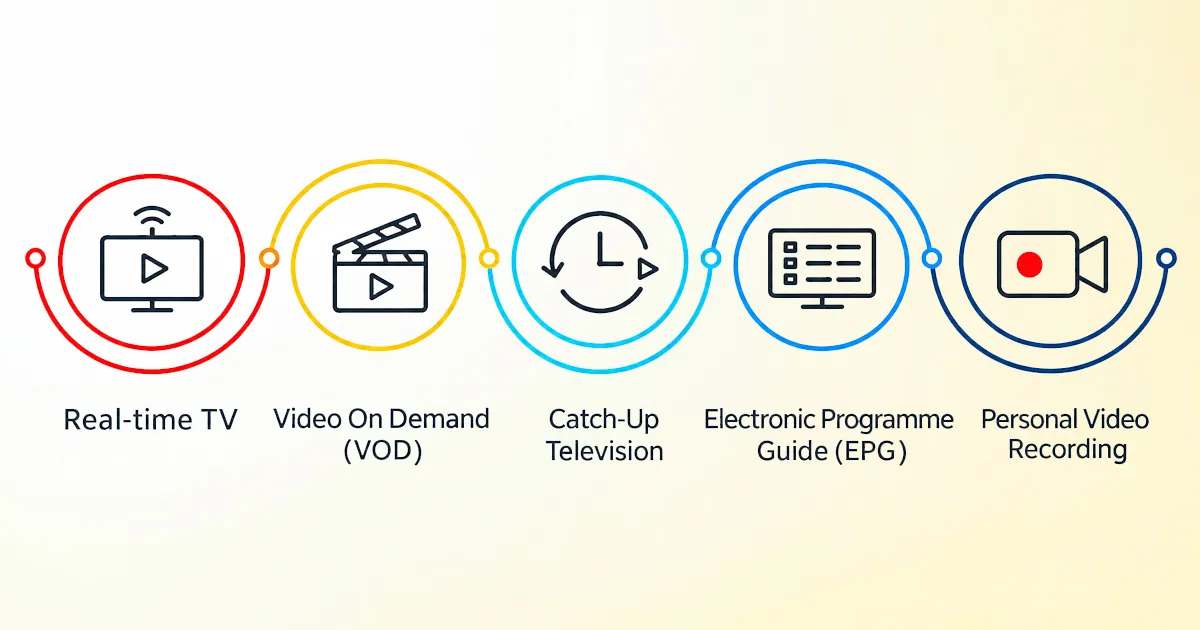
IPTV Providers in Canada have different features, packages and prices. Some offer a wide range of features, while others only provide a select few. All offer an array of entertainment options. Live TV, movies, and TV shows are only a few of the many options available.
Some features worth discussing are:
1. Real-time TV
Real-time television refers to the broadcast of television programmes as they are produced. It encompasses news, entertainment, sports, documentary programmes and specials.
As opposed to on-demand television, it is structured to present shows in real time according to a scheduled programme lineup.
2. Video On Demand (VOD)
VOD is a method of programme distribution that gives viewers control over when they want to watch.
Under a VOD system, users select programme titles from a library of available media and watch it at their leisure. Media availability and playback are determined by subscription and distribution rights.
3. Catch-Up Television
"Catch-up TV" gives viewers the opportunity to watch television programmes after their original broadcast. This feature is useful for viewing programmes that are aired during times when the viewer is not able to watch, for example, because of work or travel.
The time during which programmes are available for "catch-up" varies from service to service. Some services allow catch-up for a programme for a limited number of days, while others offer catch-up for a programme on a channel for a specific period of time.
4. Electronic Programme Guide (EPG)
An EPG is an electronic version of a television schedule that gives information about currently aired programmes, what is coming up next or what was recently aired on a channel.
EPGs help users quickly find what they want to watch from a large channel selection.
5. Personal Video Recording
Some television services offer their users the ability to record television programmes. Recording can be done on a storage device that is physically connected to the television or on a storage device that is hosted in the cloud.
Recording limits, how long the recording can be stored and if it can be played back varies from service to service.
What’s the Difference Between IPTV, Cable TV, Satellite TV, and Streaming?
All these methods allow you to access entertainment. However, they have distinctive means of delivery and features.
| Feature | IPTV | Cable TV | Satellite TV | Streaming Platforms |
|---|---|---|---|---|
| Delivery method | Internet Protocol (IP) network | Coaxial cable network | Satellite signals received through a dish | Public internet |
| Live television | Yes, depending on the service | Yes | Yes | Some platforms |
| On-demand content | Often available | Package-dependent | Package-dependent | Core feature for many |
| Internet required? | Yes, for content delivery | Not necessary | Not necessary | Yes |
| Special equipment | A box or compatible device | A cable box | A dish and receiver | A compatible device or app |
It’s important to note that internet-based television and traditional IPTV are not the same. Some services use managed networks, while others use applications that stream over a traditional broadband connection.
The option that suits you is based on how you watch television, the channels you want, and the flexibility you expect from your subscription.
IPTV Options in Canada: What Are My Choices?
There are several major television service providers in Canada with different offerings and technologies. In your area, you may see options like:
Oxio TV
CarryTel TV
RiverTV
Bell Fibe TV
Rogers Xfinity TV
TELUS Optik TV
SaskTel maxTV
Videotron Helix TV
Cogeco
These providers shouldn’t be used interchangeably. Differences may include how a service is delivered, the equipment required, coverage, channel offerings, and subscription offerings.
Some providers bundle television with other services, while others focus on specific audiences (like Real TV, focus on Indian specific content delivery in multiple languages) or types of entertainment.
Availability is another important consideration. A service offered in one province or city may not be available at another address. Always visit the provider’s official site to confirm coverage, packages and devices supported.
What About International and Indian TV Channels?
Different households have different preferences, and many want to go beyond traditional Canadian channels.
International television services offer different languages, entertainment, films, news, and other cultural programmes.
Many South Asian households want to have access to a range of Indian television channels including Hindi, Punjabi, Tamil, Telugu and Malayalam programming and films as well as Bollywood and other regional shows.
The same for European, Asian, Middle Eastern and other international programming.
Before subscribing, please check the actual channel lineup, regional availability, and distribution rights. The same logic applies to international content, like local TV shows.
What Internet Speed Do You Need for IPTV?
Since IPTV uses the internet for streaming, your broadband connection dictates the quality of your streaming experience.
Not having enough bandwidth, network congestion and an unstable Wi-Fi connection can result in poor streaming quality and experience.
As a general rule, for HD streaming, Netflix recommends a speed of at least 3 Mbps. For full HD, 5 Mbps is recommended, and for Ultra HD (4K), at least 15 Mbps is recommended.
| Streaming Quality | Recommended Internet Speed |
|---|---|
| HD | 3 Mbps |
| Full HD | 5 Mbps |
| Ultra HD (4K) | 15 Mbps |
Again, these standards are for streaming services like Netflix and may not apply to IPTV in general and other television providers.
You’ll also want to take into account other devices on your home network. Activities like watching TV while your spouse is gaming online, making video calls or downloading large files can greatly increase the bandwidth requirements on your network.
Tips to Improve Your Streaming Quality
Here are some suggestions that can help you improve your streaming experience.
Use High-Speed Internet: It is important to use high-speed internet to have a consistent and non-stop viewing experience.
Make Use of Ethernet: If you’re playing games, streaming, or doing other high data use tasks, consider using a wired connection.
Place the router in the right position: If you happen to be using Wi-Fi, don't keep the router covered up or obstructed by walls or behind large furniture.
Check Network Congestion: Other devices connected to the network may reduce bandwidth.
Update Equipment: Update the streaming device and your TV.
Check the Service: If interruptions occur, the problem may be on the service provider’s end.
Buying a higher speed plan does not always provide better quality for streaming. The provider’s network and equipment also play a role in quality.
How Much Does an IPTV Subscription Cost in Canada?
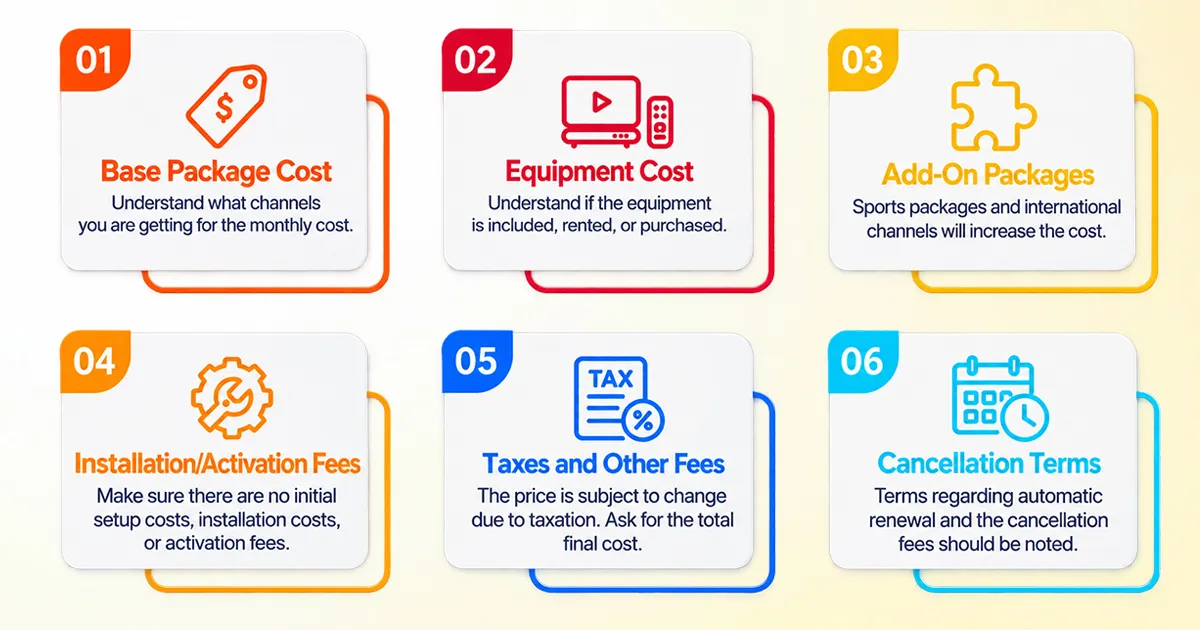
There is no one price for IPTV in Canada. Different providers have different price structures based on the packages, channels, equipment, and features.
While choosing a package, you should look at the overall cost and not just the advertised monthly cost.
Some costs to consider include:
1. Base Package Cost
Understand what channels you are getting for the monthly cost.
2. Equipment Cost
Understand if the equipment is included, rented, or purchased.
3. Add-On Packages
Sports packages and international channels will increase the cost.
4. Installation/Activation Fees
Make sure there are no initial setup costs, installation costs, or activation fees.
5. Taxes and Other Fees
The price is subject to change due to taxation. Ask for the total final cost.
6. Cancellation Terms
Terms regarding automatic renewal and the cancellation fees should be noted.
Canadian IPTV subscriptions should be researched to see if they require you to purchase your internet from the same company. Certain bundles include both TV and internet services.
Is IPTV Legal and Safe in Canada?
IPTV is simply a method of delivering digital content and therefore isn’t illegal. However, it is important to check if the provider has the right to distribute the digital content.
The CRTC states that online content is licensed to be available in certain geographical areas and territories. Therefore, a TV show that is available to stream in one country may not be legal to stream in Canada. Because of this, some services use geo-restrictions.
An extensive channel list does not mean that the service is providing legitimate channels.
Prior to subscribing to a service, you should consider:
Check if the company has a physical location and provides business contact.
Check if the company discloses what they provide in their packages.
Check terms regarding subscriptions, renewals, and cancellations.
Choose secure methods of payment.
Check if the service uses your personal information in an ethical and legal way.
Be sceptical of hidden costs, unrealistic guarantees, and misrepresented content.
Factors to Consider Before Choosing an IPTV Service
Making a decision on which television option to choose can be difficult. One way to approach this problem is to identify what you want to watch. Some examples are channels, shows, sports, and/or movies. Once you have created this list, you can figure out if your chosen IPTV provider has what you want. Also, you need to see if your chosen IPTV provider is able to stream the contents you want on the devices you have and if the streaming quality meets your needs.
Taking these steps helps you make an educated purchase and compare IPTV services available in the market.
Conclusion
As we have discussed about IPTV providers in Canada, it can be said they are indeed a boon for customers who are looking for multi-language content from different parts of the world. Canadian consumers have diversity in them since many residents happen to be foreigners like Asians, Chinese and people from different parts of the world. Because of various IPTV service providers in Canada, they have a lot more options for accessing television because of this technology. It brings together the best of live and on-demand television and integrates it with web-based viewing.
Moreover, this article also explains how price and channel counts can be deceiving when making service comparisons. The most important consideration should be service reliability and how well a provider meets your needs. Factors like content, support, and transparent rates and terms should also be evaluated.
When comparing traditional television providers and web-based television services or IPTV service providers in Canada or elsewhere, consider how each service works. Only by studying the various offerings available will you be able to make an informed decision regarding which service best meets your family’s and your home’s needs.
Frequently Asked Questions ?
Which IPTV Service in Canada Is the Best?
The best IPTV service is the one that works for you. Check which IPTV service providers are in your area. Some of the major IPTV service providers in Canada include Real TV, Bell, Rogers, TELUS, SaskTel, Videotron, Cogeco, Eastlink, and others. Don’t forget to check the costs as well.
Is High-Speed Internet a Must for IPTV?
Yes, IPTV needs a broadband connection. The required speed is based on the number of devices streaming at the same time and resolution of the videos being streamed.
Is IPTV Compatible with Smart TVs?
Yes, IPTV technology is compatible with Smart TVs. However, some IPTV services may not be compatible with them. Some service providers require the use of a set-top box or streaming device.
What Is the Difference Between IPTV and OTT Streaming?
In Canadian regulatory terms, IPTV refers to television transmitted over a closed IP network. OTT services transmit video content over the public internet. From an end-user perspective, both services offer entertainment and are largely complementary.
Can I Use IPTV on More Than One TV?
Most IPTV services allow more than one device to be used on the service at the same time, though some restrict this. Check your package for more information.
Is an IPTV Box Required?
Not always. Many IPTV services use a set-top box, while others use a smartphone or tablet.
Why Does IPTV Keep Buffering?
There are a number of reasons that IPTV buffers. Poor internet speed, distance from the Wi-Fi router, equipment, or congestion on the service’s streaming servers can all cause buffering. The best way to determine the reason for buffering is to check your connection and/or restart your equipment.

